




For the Twenty Minutes That Used to Be Impossible
Built for the Moments Your Dog Can't Settle.
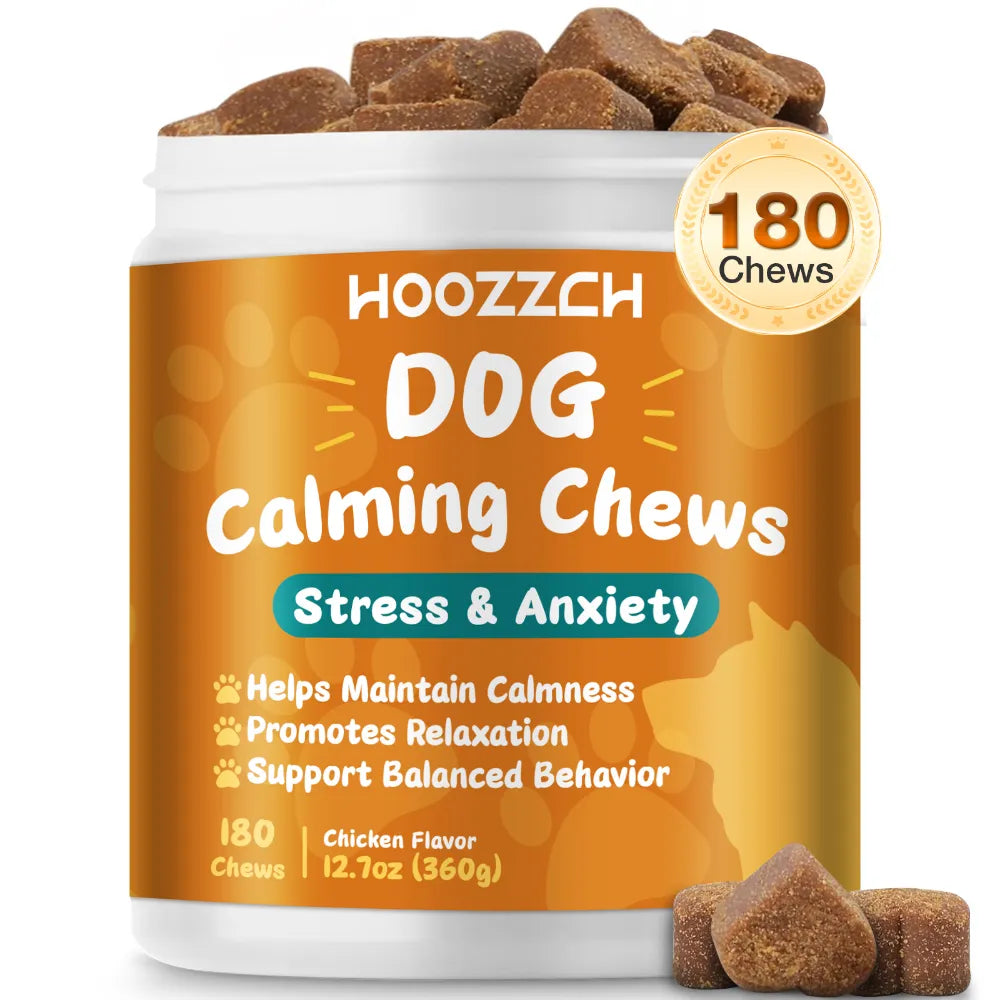
Our calming chew is a soft, chicken-flavored chew made for situational stress — the doorbell, the thunderstorm, the carrier, the waiting room.
It supports the calm behavior your dog is capable of on a good day, so the good day isn't limited to days when nothing happens. No powders to measure, no pill hidden in peanut butter, no standoff at the treat jar.
- Supports Calm Without Flattening Personality
- Soft Chew, Real Chicken Flavor
- 180 Chews per Jar — About 3 Months at 2 a Day
From the First Chew to an Easier Week
The pacing. The panting. The door scratched raw before you've even put your shoes on. It's easy to call it bad behavior.
It usually isn't. It's a dog carrying more stress than he has ways to discharge. A chew doesn't train the behavior away — it lowers the volume enough that the training can land.

-
First 30–60 Minutes
The Single Event
Chew given before the trigger · Shorter recovery time · Less pacing and whining · Same personality, lower volume
-
Week 1
Finding the Right Fit
Dose matched to weight Timing dialed in First predictable quiet evenings
-
Weeks 2–4
The Routine
Dose matched to weight Timing dialed in First predictable quiet evenings
-
Months 2–3
The Hard Seasons
Significant Muscle Gains · Strength Plateau Breakthrough · Improved Body Composition · Stronger Bones and Tendons
-
Ongoing
Part of the Routine
Long-Term Muscle Retention · Sustained Performance Gains · Enhanced Cognitive Function · Peak Athletic Performance
How to Use
One chew, 30–60 minutes before the thing that's hard — not after it starts.

Before the Trigger, Not After
Chews need a head start. Give it 30–60 minutes before the storm hits, before the car starts, before the vet calls you in. Waiting until your dog is already over threshold is the most common reason owners think it didn't work.

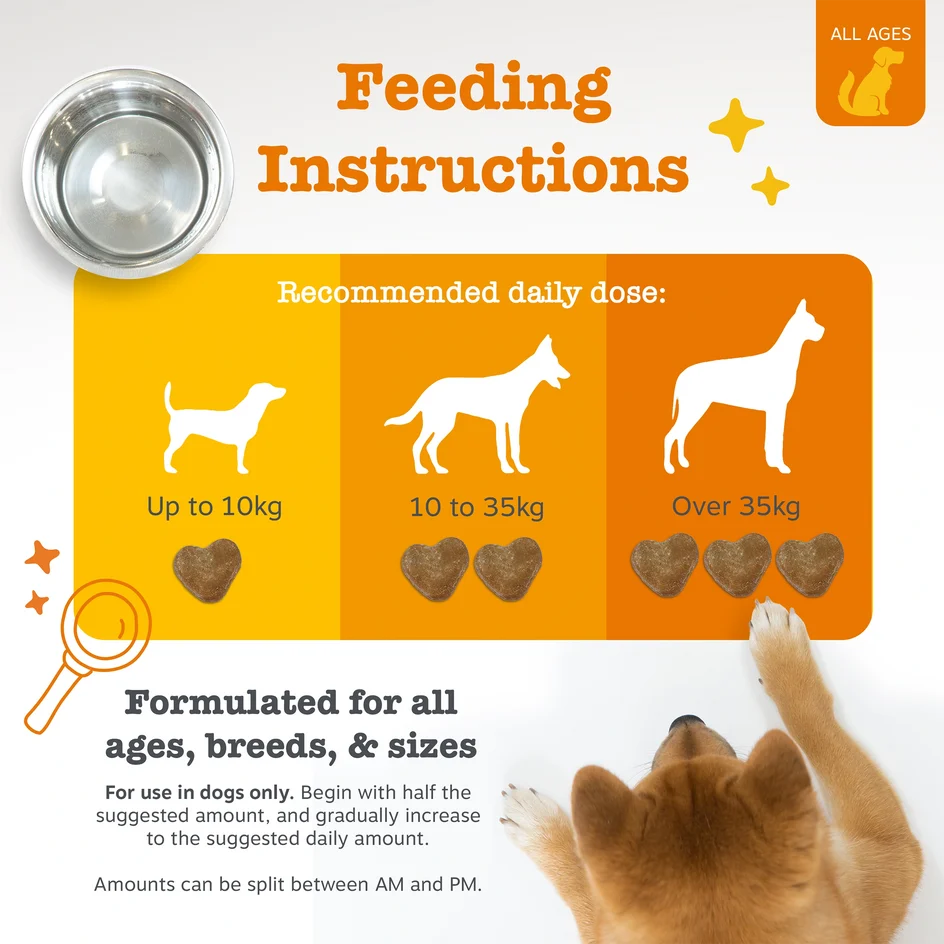
Match the Chew to Your Dog's Weight
Start at the low end of the weight range on the jar and adjust from there. The right dose is the one where your dog is calm but still himself — not the one where he sleeps through the afternoon.

Keep the Routine Boring
Same time, same place, same chew. The predictability is half of what makes it work — a dog that knows what's coming is already calmer than a dog that doesn't.
4 Clinically-Studied Compounds Doing Different Jobs
L-Theanine
An amino acid that promotes the synthesis of serotonin – a natural chemical that helps fight anxiety, reduce hyperactivity and encourage relaxation.

L-Tryptophan
An amino acid that aids synthesis of Vitamin B3, which supports cellular health.

Valerian Root
Traditionally used for its calming and soothing properties, this herb can help manage stress.

Magnesium Citrate
A salt compound that helps maintain proper nervous system function and healthy metabolism.

22 lb beagle mix. One chew 40 minutes before the doorbell and he barks once, then goes back to his bed. Still himself, which is what I wanted.

48 lb shepherd mix. Two chews an hour before a storm and she'll stay in the room. Still not happy about the noise, but she's not hiding under the bed.

Car rides and the vet. One chew 45 minutes out and the drive is quiet. He still hates the carrier, but I'm not arriving wound up.


Frequently asked questions
What are HOOZZCH Calming Chews?
Soft, chicken-flavored chews made for situational stress — the doorbell, a thunderstorm, the car, the carrier, the waiting room. Each chew carries four ingredients: L-Theanine, L-Tryptophan, Valerian Root, and Magnesium Citrate. They're not a training shortcut and not a sedative. The goal is a dog who is still himself, just less wound up by whatever is in front of him.
How many chews does my dog need?
Follow the weight chart printed on the jar — a 15 lb dog and a 90 lb dog are not the same dose. Start at the low end of your dog's weight range and only move up if he needs it. The right dose is the one where he's calm and still himself. If your dog sits between two ranges, ask your vet which one fits.
When should I give it — before or after?
Before. Give one chew 30–60 minutes ahead of the thing that's hard, not once it has already started. Chews need a head start — waiting until your dog is already over threshold is the most common reason owners think it didn't work.
Will it change who my dog is?
No. The goal is the same energy, the same personality, just less wound up. If your dog seems off or unusually quiet, halve the chew and see how he does. If it keeps happening, stop and talk to your vet.
Do I give it every day, or only before stressful events?
Either works, but daily use is where it becomes more useful than occasional. The same chew on a predictable schedule is what turns a nervous week into a manageable one. Give it consistently for two to four weeks before you decide whether it's working for your dog.
How long does one jar last?
180 chews per jar. At two a day that's roughly three months; a dog on a higher weight-based dose will go through a jar faster.
Can I give it with my dog's other supplements or medication?
Talk to your vet first — especially if your dog is on medication, is pregnant or nursing, or has an existing health condition. These are soft chews, not a replacement for veterinary care.